
 If thus far we toured around a number of European capitals, the time has come for us to also explore several of the countries in the middle of Bucharest. We will start out with two states in Latin America: Argentina and Brasil.
Argentina and Brasil Streets open at each of the ends of Washington Street, just as the states whose names they bear. By visiting them, you have the opportunity to see them by comparison and to realize from the very start that Argentina and Brasil Streets are very different from each other.
Brasil Street, longer, with one of its ends connected to Iancu de Hunedoara Boulevard and the other connected to Bruxelles Street, is larger and brighter, having white-yellow houses, in the tones of the sand on Copacabana Beach. The vegetation, shorter, is formed mainly of pine trees, dwarf spruce trees, and many, very many fig trees.
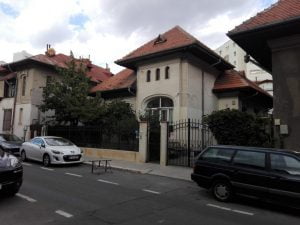
The houses were erected in the period between the two World Wars and are tall, even though the majority are possessed only of a ground floor, one story or an attic. What impresses at the edifices in this area are the beautiful details at its balconies, handrails and gateways with Romanian motifs.
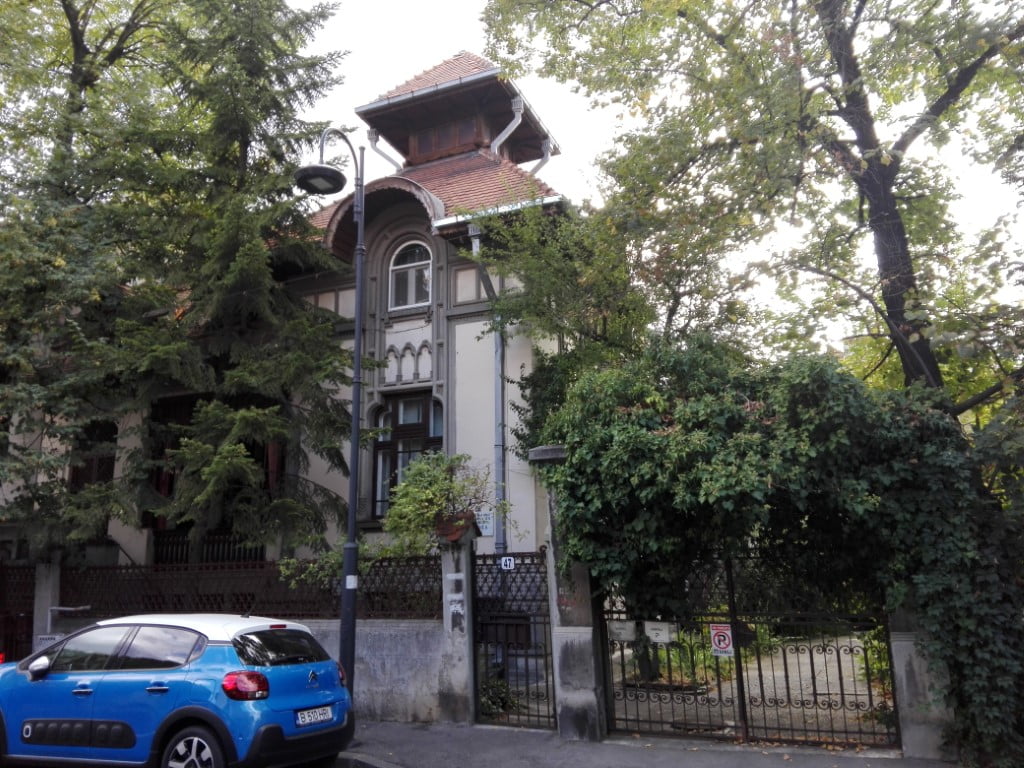
At the end toward Bruxelles Street, at No. 47, there is the house in which lived and created in the latter part of his life the poet and publicist Ion Vinea (1895-1964). Endowed with an attic, painted with the faded yellow peculiar to the street, with the tall fir tree in its courtyard, the house is possessed of a peaceful and slightly conventional air. You are almost not able to think that here, sometime ago, it was the retreat of a maverick spirit, a style founder back in the thirties of the last century. Ion Vinea enjoyed prestige in the Vanguardist Movement; he started when he was only 17, along with Adrian Marin and Tristan Tzara, the bi-monthly magazine “The Symbol,” in which he would also publish his first poems. For ten years, between 1922-1932, he was the director of the “Contimporanul / The Contemporary” Magazine, in which he advocated the absolute liberty of creation, devoid of traditional norms, devoid of literary principles, devoid of emotions and sentiments.
From Brasil to Argentina
By contrast, Argentina Street that, in turn, connects at its other end Iancu de Hunedoara Boulevard to Washington Street, is much shadier because of the tall trees whose canopy forms a Gothic ribbed-vault that filters the light and heat, offering a cooling atmosphere in the torrid summer days and alleviating the water fall.
At the end toward Washington Street we find a new building with modern architecture and special name, making reference to Argentina. The design and decorations of the building allow the creation of spectacular light-games.
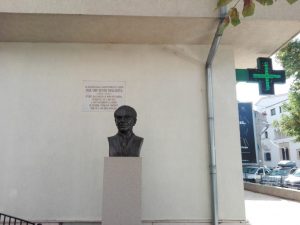
Next to this building, in an area making the connection with Paris Street, there is the bust and a memorial plaque dedicated to the Historian Victor Papacostea (1900-1962). It is probably the place with the greatest amount of emotional charge in this corner of Bucharest, because of the tragic fate the professor had. This place is reminiscent of a certain period in the history of this country, a period in which the intelligentsia in Romania has been decimated by the Communists. Victor Papacostea was one of the victims of this era. Historian, leading figure of the Liberal National Party and founder and director of the Institute for Balkan Studies and Research, Papacostea was arrested in May 1950. He was incarcerated at Sighet. Released after five years, the historian was incarcerated again in 1957. After a year, he was released again. The stress he underwent, though, affected him permanently, and in 1962 he died because of a brain hemorrhage.
By two streets with Latin, exotic and remote resonances, Brasil and Argentina, real bridges are created over continents and times in the middle of Bucharest nowadays, and the people who direct their steps over them, driven out by some goal or just touring around, draw their breath for a moment and aim some thought to those before them or to the lands across the oceans, perhaps appeasing a secret yearning they have for travel or vacation.

Author: Ștefania Enache
Photo: Corina Gheorghe