
 Besides the spectacular tourist attractions enriching Bucharest and recommending it as a perfect destination for the persons eager to discover new places, the existing healthcare network in the capital represents a great advantage from the economic standpoint. Medical tourism, a field all too little exploited in Romania, begins to get stronger and to turn into a segment with great chances of development.
The most important city of Romania is currently the perfect destination for the foreigners who want to take care of their health. Moreover, is the place where the Romanians in the rest of the country have access to healthcare services similar to those in any other state in the West. And these opportunities are provided not only by the private Clinics. They exist within the Public Healthcare System as well, where the investments in recent years allowed the development of a number of exceptional healthcare services.
“Health Tourists” Discovered the Opportunities Provided by Bucharest
The network of 19 Hospitals under the administration of Bucharest City Hall, through the Hospitals and Healthcare Services Administration Bucharest (HMSAB), fall into this category. The Healthcare Units within this chain are possessed of latest healthcare equipment, and can provide treatments for a number of ailments.
It is important for the realities in Bucharest Hospitals to be introduced, so we will embark upon a campaign presenting the readers with all the 19 Hospitals under the Bucharest City Hall administration, along with the healthcare services they are able to provide. Each of these Units can actively contribute to the development of medical tourism in Bucharest and can help the capital to grow even more from an economic standpoint.
Foreigners with health issues choose to come to our country because they have access to healthcare services much cheaper in comparison to those in their country of origin. Additionally, they have the possibility to benefit of high-quality treatments provided by very well-trained medical personnel.
But medical tourism does not rely on foreign patients alone. Romanians practice medical tourism as well, preferring to look after their health in those Hospitals providing them with certain securities. And from this move, not only the Healthcare Units receiving the patients stand to gain, but also industries somehow related. And at this point we talk firstly about the Hotel system.
The most recent studies reveal that medical tourism grew in recent years, which caused those who come to receive treatment or to accompany a sick person to represent 10% of the total number of the clients of the Hotels in Bucharest, Cluj-Napoca and Sibiu. An analysis carried out by a big Hotel chain and made public at the end of the month of February indicates that the 10% includes both foreigners, and Romanians.
„Health tourists” became an ever-increasing category. As we mentioned, an important part of the Hotels’ clients are the hospitalized patients’ relatives. Another part are the patients themselves, especially foreigners, coming to Bucharest for treatments not needing a longer stay in a Hospital.
The Way Foreigners Get Treatment in Bucharest
When we speak about foreigners, they come to Bucharest especially for procedures pertaining to either dentistry or esthetic surgery. In fact, capitalizing on this request, there are in the large cities listed above (Bucharest, Cluj-Napoca and Sibiu) a number of companies that practice “all-inclusive medical tourism,” providing packages including transportation, accommodation and treatment.
Dental services provided by the Clinics in the capital are in great demand among foreigners, because of the excellent ratio between the cost and the quality of the treatment. For instance, a dental implant, which abroad may get to as much as 2,500 EUR, here costs between 450 and 700 EUR.
Not only dentistry is very attractive to the foreign patient. Aesthetic surgery, the bariatric one, but also ophthalmic treatments are in high demand. Additionally, foreigners come for various orthopedic interventions, but also for the carrying out of a number of procedures of in vitro fertilization.
Although perhaps it is believed that only the private Healthcare System stands to gain from this interest of foreigners for the health therapies in Bucharest, the reality confirms that, for a number of years now, the State Clinics in the capital have caught the foreigners’ attention.
And the things are just getting started.
The “Carol Davila” Nephrological Clinical Hospital, Located in a Museum-Building
One of the Healthcare Units under the administration of the Capital City Hall fitting very well into the medical tourism picture is the “Carol Davila” Nephrological Clinical Hospital.
The institution, bearing the name of the Romanian Physician and Pharmacist of Italian origin, Carol Davila (1828, Parma – 1884, Bucharest), was completely remodeled and provides hospitalization conditions similar to those in the West.
The building hosting the Hospital falls into the category of historical monument edifices. The edifice was erected in 1894 and originally hosted the Court of Auditors of Romania. The prevailing architectural style is of the neoclassical type. Thus, the patients hospitalized in this Hospital are the beneficiaries of an environment meant to help them recover their health.
Structured in a number of wards (Nephrology I, Nephrology II, Surgery, Anesthetics and Intensive Care, as well as the Allergology and Clinical Immunology Department), currently the Hospital has a 60% patient influx from outside Bucharest. People choose to get treatment here also owing to the medical team working in the Healthcare Facility and achieving excellence day by day.
As it is structured right now, the Hospital can provide all sorts of surgical interventions besides the orthopedic and cardiac ones. Moreover, through the Allergology and Clinical Immunology Department, it provides the possibility of carrying out a number of tests of allergology diagnosis, tests requiring monitoring in the Hospital.
It must be mentioned that as regards nephrology and internal medicine assistance for the nephropathic patients, the “Carol Davila” Clinical Hospital may represent the last spot to which a sick person comes. And here the physicians need to identify the optimal solution to the health issue that person faces.
One of the most recent investments made in this Hospital gave birth to an Endourology and Lithotripsy Department. As a result of the significant investments made by the Bucharest City Hall in the Units under its administration, “Carol Davila” Clinical Hospital is endowed with latest healthcare equipment worth over two million EUR. The total value of the investments made in this Hospital amounts to 3,1 million EUR, consisting of equipment and renovations.
At the present time, under the administration of the Bucharest City Hall there are three Hospitals possessed of modern Urology wards. We are talking about “Prof. Dr. Th. Burghele” Clinical Hospital, Colentina Clinical Hospital, and “Carol Davila” Nephrological Clinical Hospital.
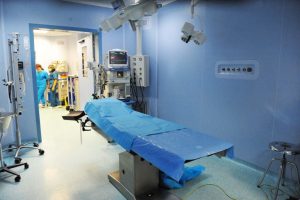
As regards the “Carol Davila” Hospital, the funds assigned by the Municipality were used for the setting up and equipping the Endourology and Lithotripsy Department, part of the Surgery Ward. On this occasion, an operating room was developed where endourologic interventions are performed. In these cases, the hospitalization period is significantly reduced, even one-day hospitalizations being possible.
Therapies the physicians in this Department apply also include ultrasound lithotripsy, a modern method at the border between nephrology and urology, which allows non-surgery solving of numerous cases of nephrolithiasis.
Services provided by the “Carol Davila” Nephrological Clinical Hospital fall both into the category of those covered by the National Health Insurance House, and of the paid ones. Thus, both Romanian patients registered with the State Insurance System and those (Romanians or foreigners) who can afford to pay, can resort to the help of this Healthcare Facility. Hospitalization fees differ according to the treatment the patient needs.