
 At 30 years after the fall of the communist regime, we Romanians have come to appreciate less and less the freedom we have gained in 1989. There are many people who argue that: “before it was better” Really?
The Bucharest that we present today is the Bucharest of the free people, it is the Bucharest of those who feel safe, the city of those who can explore from a myriad of possibilities and who can choose without any obstacle the way in life.
We will discover free Bucharest with the help of a young woman who grew up in Syria. Heba Khalifa was only a child when she knew the horrors of war, when she saw how to live in a country crushed by so many conflicts.
He came to Romania ten years ago. She was only 12 when her parents decided to give up everything they had and run out of war. Bucharest was a natural choice, because her mother was born here.
It was not an easy transition from life in an Arab country to that of Romania. Things were extremely complicated as her parents left everything they ever worked for in Syria. But they had the power to take it from the beginning and, today, they have two food warehouses in the Romanian capital. They are part of those foreign businessmen who found in Bucharest all the opportunities they needed to build a business. After graduating from college, Heba began working with her parents, taking care of the accounting of the company they own.
The story of this family, a story I learned from Heba, comes to highlight the openness of Bucharest for diversity, but also that the city is one with many business opportunities. At the same time, it is a place that fully deserves to enter the world tourism map due to its beauty, beauty that Romanians often forget to highlight.
A free city
During the discussion I had with Heba, I realized how lucky it is to be born in a country where there is peace. It was Heba who reinforced this idea by stating “in life, it doesn’t matter what you have, where you come from or who you are. All that matters is to live in safety and freedom, as I live in Bucharest”.
Not only safety is what she likes in Bucharest. Heba has discovered, step by step, the city and now she loves and accepts it as it is.
When she came to the Romanian capital she did not know Romanian very well, so her parents decided to enroll her in a high school in Arabic. Things started to get complicated when she had to go to college. She opted for a private university. Here she had to deal with difficult episodes, few being able to understood that she came from another culture, that she has a different religion and that she must be guided by certain principles. With the help of her colleagues she managed to overcome all the difficulties. Today she claims that, although she loves Syria with all her heart, it is very difficult for her to think about leaving Bucharest, her friends here, the fun in this city with lively people.
Even though the adaptation in the Romanian capital was not an easy one, Heba now feels at home in Bucharest and likes to explore her favorite places in the city whenever she has free time.
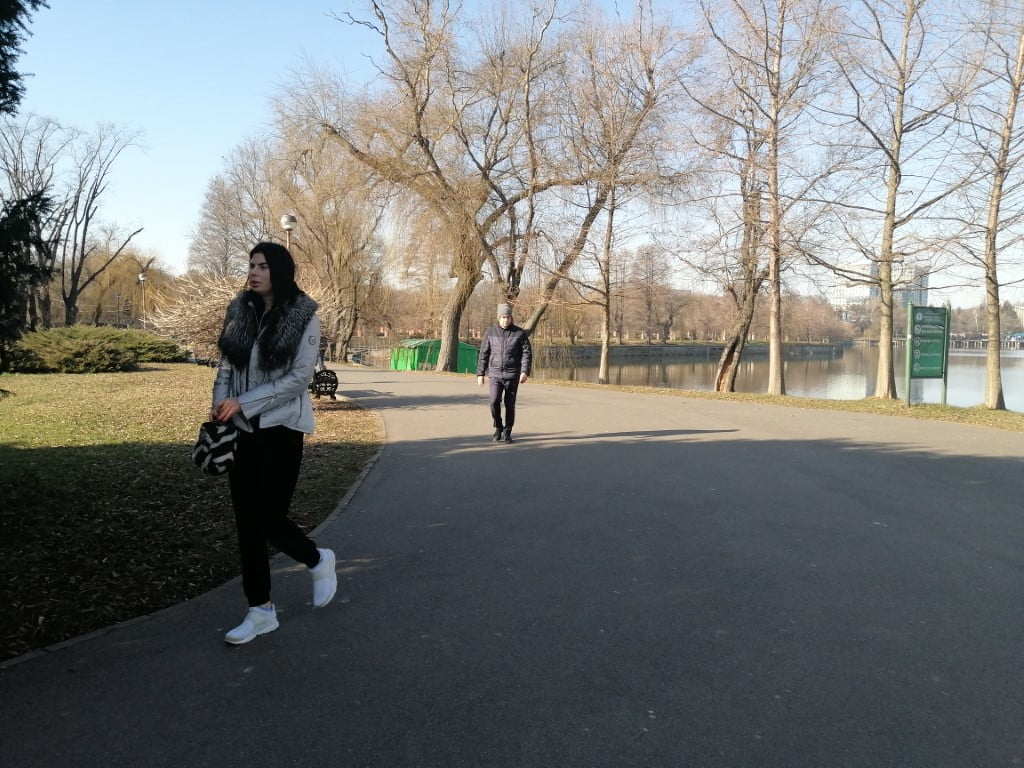
Walks through Herastrau Park are her favorites. She also likes Carol I Park, a place that allows her to discover parts of the history of this country. Victory Avenue is another area that she recommends from the whole heart due to the architecture.
Whenever she has the opportunity, she does not miss meetings with friends in the Old Center. Equally fascinating is the exciting life of the many malls in Bucharest. When she wants to remember Syria, she goes to one of the eastern cafes in the city.
Heba Khalifa actually told us the story of a free city, the story of a city where, despite the problems they face in their daily lives, people live in peace. And for someone who has seen the destruction of a war, peace is the most important.
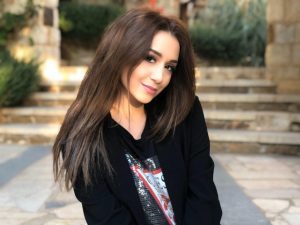
The young woman from Syria has a simple message, a message that if more and more people would understand, life would be much simpler: “we must accept that God made us different, by the way we look, by religion, by origin, by character, by culture, by faith. But we are all people!”