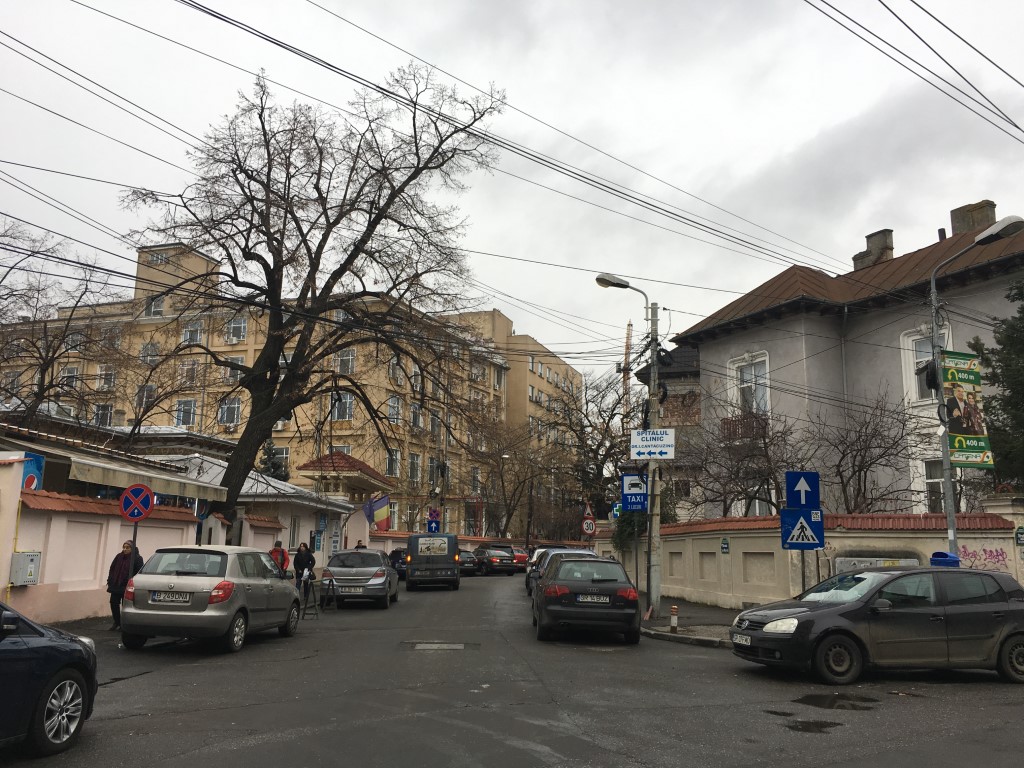

 The health network available to Bucharest can be proud, first and foremost, of an impressive group of experienced specialists, and these specialists can compete with their colleagues abroad at any time. Medical professionals are the most important resource available in the healthcare system in Romania.
Thanks to these professionals, Romanian medicine is known throughout the world.
The personalities who founded Dr. I. Cantacuzino Clinical Hospital
Today we will talk about Dr. I. Cantacuzino Clinical Hospital, a medical unit that bears the name of the “fatherˮ of the immunology and pathology school in Romania.
Ion Cantacuzino, a renowned physician and microbiologist, is known worldwide for his anti-cholera immunisation method. “Cantacuzino methodˮ is used nowadays in areas where there are cases of cholera. Through his actions, Professor Cantacuzino made it possible to introduce in Romania, in 1926, the vaccination of new-borns against tuberculosis. It was the second country in the world, after France, to use the BCG (Bacil Calmette-Guerin) vaccine.
The name of this great personality is closely linked to the destiny of Dr. I. Cantacuzino Clinical Hospital.
The documents that have been preserved over time indicate that the nucleus on which this medical unit was built was the Labor, Health and Social Care Dispensary, inaugurated in 1930, in 12 Budișteanu Street. The opening of this dispensary was an important step in modernizing the healthcare system in our country. Structured around 11 medical services, the unit had a sustained activity in providing free consultations and medicines for a significant number of social categories (students, war veterans, widows etc.).
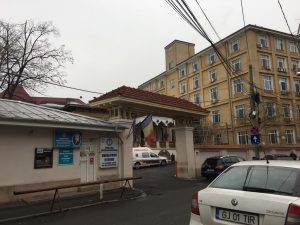
Due to the contribution that Professor Ion Cantacuzino brought to the Romanian medicine, but also in the development of this dispensary, it was also decided, in 1930, that the new health unit should bear the name “Central Polyclinic Dispensary – Professor Dr. I. Cantacuzinoˮ.
Meanwhile, there is also a relocation of the dispensary, which, in 1932, goes to Ioan Movila Street, in a building built by the architect Ion Mincu at the request of General Iacob Lahovary. Subsequently, the building was taken over by the Cantacuzino family.
The free medical services are tested
Professor Cantacuzino’s contribution is also felt in that the dispensary is a true experimental unit. Thus, two years after moving to the location in Ioan Movila street, it was decided that the polyclinic dispensary combined the preventive and curative health activities. Before the combination of the two activities, the group of doctors serving the dispensary performed a series of field investigations which eventually led to the registration in the Romanian legislation of the principle of preventive medical examination, carried out periodically.
The same group of specialists also tested and analysed the problem of free medical consultations, medicines and treatment. And the result was the inclusion by law of free healthcare for patients lacking financial means.
The medical unit expanded a lot, new buildings were built to serve it and in 1934 it was transformed into “Dr. I. Cantacuzino” Central Hospital. This is the birth year of this elite medical unit in Romania.
Meanwhile, the name of the hospital has undergone new changes, so that today it is known as “Dr. Ion Cantacuzino” Clinical Hospital.
The 86 years of the history of this medical unit are marked this month and remind of the significant development that the medical act has undergone.
At present, the hospital is structured as follows: The clinical department for internal medicine I – 50 beds, The clinical department for internal medicine II – 59 beds, The clinical department for general surgery I – 44 beds, The clinical department for general surgery II – 34 beds, The clinical department for obstetric gynaecology I – 56 beds, Obstetric gynaecology clinical department II – 26 beds, neonatology department – 47 beds. There are also 18 beds in the ATI area (Anaesthesia and Intensive Care) and seven beds in the Medical Oncology Department.
The unit also benefits from day hospitalisation, pharmacy, blood transfusion unit etc.
By discovering the history of this hospital that is part of the public network, we can realize what efforts have been made, over time, for the Romanian medicine to reach a certain level.
Even if it works in Bucharest, “Dr. Ion Cantacuzino” Clinical Hospital does not only serve only patients in this city. Its services are accessed from all over the country. Also, there are more and more people from abroad who choose this medical unit to undergo different treatments, many of them surgical.