
 Arch. Emil Ivănescu, president of the Bucharest Territorial Branch of the Order of Architects of Romania, characterizes Bucharest as a contrasting mix of areas, centers and neighborhoods, a city of cities. The specialist believes that a first aid policy is required for everything that means heritage.
How can we characterize Bucharest of 2019 architecturally?
I would say, development is the word that defines the area of construction and architecture. It is being built quite a lot. The public, the customers began to demand quality and style: essential for a contemporary living. Real estate projects, for example, really good ones, are beginning to offer not only apartments, but also social, community and leisure services, green areas, small community and leisure centers.
How has the city evolved, from the architectural point of view, over the last hundred years?
Bucharest is a city of cities: it is a contrasting mix of areas, centers and neighborhoods. It has evolved on fragments and at different times. It was very difficult to develop homogeneously. There were urban achievements, but also dramas.

What are the architectural styles that dominate in Bucharest remained untouched by the communist constructions?
We have a preconception about communist architecture. Except for a few years, quite gloomy, the communist architecture was, paradoxically, of good quality, in the context of its historical period. Even in the 60s and 70s, communist architecture was at the same level as the international architecture of most European countries.
It is a mistake we make: we do not value or respect many of those constructions. And we do the same thing with interwar modernism.
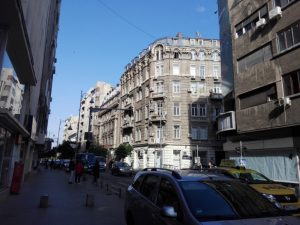
Some countries or cities, such as Tel Aviv, have policies to promote modernism. In Bucharest we have a very large modernist fund, disrespected and unprompted, but highly appreciated by all tourists from civilized countries.
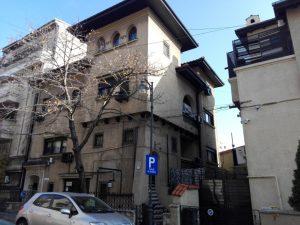
Do you think that stylistically and architecturally, Casa Poporului is valuable ?! Wrong! Visit some houses made by Horia Creangă (nephew of Ion Creangă) or Marcel Iancu, degraded or attacked by all kinds of roofs or woodworks added subsequently. Again, others know how to make money from their modernism, which they maintain, and we have twice as much background and we do not know how to value and respect it.
What are, from your point of view, five objectives that the tourist passionate about architecture should not miss when he arrives in Bucharest? Why?
I will answer this question differently. We, at the Order of Architects – Bucharest Branch, organize one of the most important architectural events in the country, the Bucharest Architecture Annual, which awards yearly the best buildings made in the Capital. This year we are at the 17th edition. On the online platform of the Annual you will find details about most of the representative buildings in contemporary Bucharest (since the 90s) and there are hundreds of buildings.
Starting with 2020, we will develop a new concept: Exploring Bucharest, through which we will offer interested public guides of contemporary architecture in Bucharest, as well as tours of contemporary architecture. European cities such as Amsterdam, Paris, Barcelona, Budapest, Zurich etc. offers to the public such tours focused on the promotion of the contemporary architecture fund, on its valorization, and, in this way, promotes the creative and construction industry, at the intersection of which, architecture, as a profession, is part.
How did Bucharest change architecturally after 1989?
The change is very big, very fast, even, sometimes, abrupt. The qualitative leap is obvious, but here is a combination of strengths: an improvement of the built environment, an increase of professionalism in the area of design and construction, an improvement of the client’s culture, an increasing supply of materials and technologies. From many points of view we are far, from other points of view, we are still hesitant.
How did today’s architects put their mark on Bucharest?
Architecture is a complex practice: it always implies the existence of several people. In other words, the mark you ask for is the sign, rather of some teams, of which the architect is a part and which he sometimes represents or coordinates. A valuable architecture is a synthesis, a good negotiation between the client, architect, designers and builder. That is why, at the Architecture Annual, for example, when we award a house or other building or interior design, we award the whole team: beneficiary, architect, designers and builders. All this team puts its mark in Bucharest.
I think that, increasingly, these teams tend to understand that a valuable architecture takes into account the urban and social context in which it develops. A good architecture is one with respect to the place, to the people and to the city.
Can you give us examples of architecturally remarkable buildings, designed entirely by today’s architects? What details differentiate them from the rest of the buildings?
Please enter the online platform of the Bucharest Architecture Annual and you will find there contemporary buildings and interiors made by Romanian architects, buildings awarded by international juries made up of outstanding specialists. Nearly 20 years of evolution of residential, civil, religious, sports, restoration and interior design. All achieved, all existing in Bucharest. You will discover a careful and logical use of sustainable materials. Often, they are not expensive materials or details, but the very good and professional thinking behind a volume, differentiates it instantly, from any construction done without a team of professionals.
Bucharest is a city with a great wealth of historical monument buildings. What measures need to be taken so that all these buildings will not be lost?
There needs to be a more applied, first-aid policy for everything that means heritage. In many civilized countries, the owners of heritage buildings, historical monuments, are helped, and they, in their turn, have to offer something in return. Usually, there is a good connection between the tourism industry and that of culture and heritage protection. There are sustainable policies in this regard. There are exemplary penalties for violating or demolishing these buildings. But in the end, it all depends on the level of culture and self-respect of each society.
How did the organization you represent get involved in this issue?
OAR Bucharest collaborates with both the administration and civil society or different organizations whose objective is to save the heritage. Both in the past and in the present we have different initiatives for classifying monuments, saving them, but also promoting them. From next year, 2020, at OAR Bucharest we will set up a working group on Heritage, to which the general public will be invited to participate. We invite you to participate in this working group and especially in the actions generated by it.
What are the most impressive projects carried out by the architects of the current era?
There are many impressive projects, but impressive here is not related to their size, but, on the contrary, to the professionalism through which they were conceived and realized, no matter the scale.
What I can call really impressive is the effort of our organization, the Order of Architects of Romania, to initiate and organize architectural competitions of solutions for public investments. It is known that most of these investments are oriented through the auction system with the lowest price: it may benefit for simpler works, but for architectural works, they are a real tragedy! Much of the architectural dissonance of our cities is a result of the lowest price auctions: a true social-urban cancer!
What is not known or not wanted to be known is that in the procurement law, the state also provided for the acquisition by competition of architectural solutions, the only way that can ensure quality, through transparency and professionalism in the field of constructions with an impact for the city and people.
We are proud because at OAR Bucharest, in just a year and a half, we have organized five architectural competitions, three with private investors and two with the national and local administration.
Those with private investors led to the development of arrangements that were finally awarded by specialized professional juries.
And a great achievement of the Bucharest OAR is the organization of the competition for the Romanian Pavilion at EXPO Dubai, in collaboration with the National OAR, with the Foreign Ministry, and with the Bucharest City Hall. The competition was a first in Romania, being a public procurement based on a solution contest. The result: a representation of Romania based not on nationalism and “calușari”, but on technology, on the idea of natural resources, sustainability and innovation, with an architectural image to contemporary standards.
Now, from OAR Bucharest and in partnership with the City Hall District 3, we will launch a unique solutions competition so far in Bucharest, for the development of a high impact public space. It is a big surprise and we will invite you to the launch of the contest.

Outside the blocks, what constructions are noticeable from the architecture of the communist period? Can we talk in Bucharest about some symbolic buildings erected during the communists? Which are those?
Very many public buildings, theaters, cinemas: the center of Bucharest is full. The Palace Hall, for example, is an exceptional building. When the construction was completed, in the 70s was of European importance. And the National Theater, and it is very good that it has returned to the initial form of the project also realized through competition. There are many buildings of that very valuable period, and not just buildings: and parks, and neighborhoods. We should learn from certain lessons of that period, but not idealize it. There are many cinemas, in neighborhood centers, which are now left to deteriorate.
What are the strongest foreign influences that have, in time, marked the architecture of Bucharest?
French architecture, with eclectic influences. Art-deco modernism, very little Bauhaus. We even have a little Soviet neo-classical Stalinism. We also have the architecture of international standardization, typical of the 70s – 80s. We now have some more contextual approaches, neo-modernist approaches, but also contemporary “main-stream” architecture. We a little bit of everything.
What are the main features of contemporary architecture?
Here is a very broad question, but at European and even worldwide level, an essential feature of contemporary architecture is the care towards the social, towards the public – urban space, towards the community, the desire for sustainability, in general. There are even office and administrative buildings, bureaucratic and seemingly inaccessible, which, today, have incorporated all these ingredients, to make them more human, more welcoming, more aesthetic, but at the same time more efficient.

Is it easy for an architect to work in Bucharest? What problem has to face?
In general, the profession of architect, here, but also in Europe and everywhere, is increasingly complex and with great responsibility. The design environment is becoming more and more regulated, more standardized, so that the architect is under great pressure. The problems that are encountered are often not only specific to Bucharest, but also to other European metropolises: a large bureaucracy, which can be efficient and oriented to the public interest. We hope that the new trends in the digitization of administrative and approval procedures will ease the procedures, bringing a significant increase to the entrepreneurial, real estate, construction and design environment.