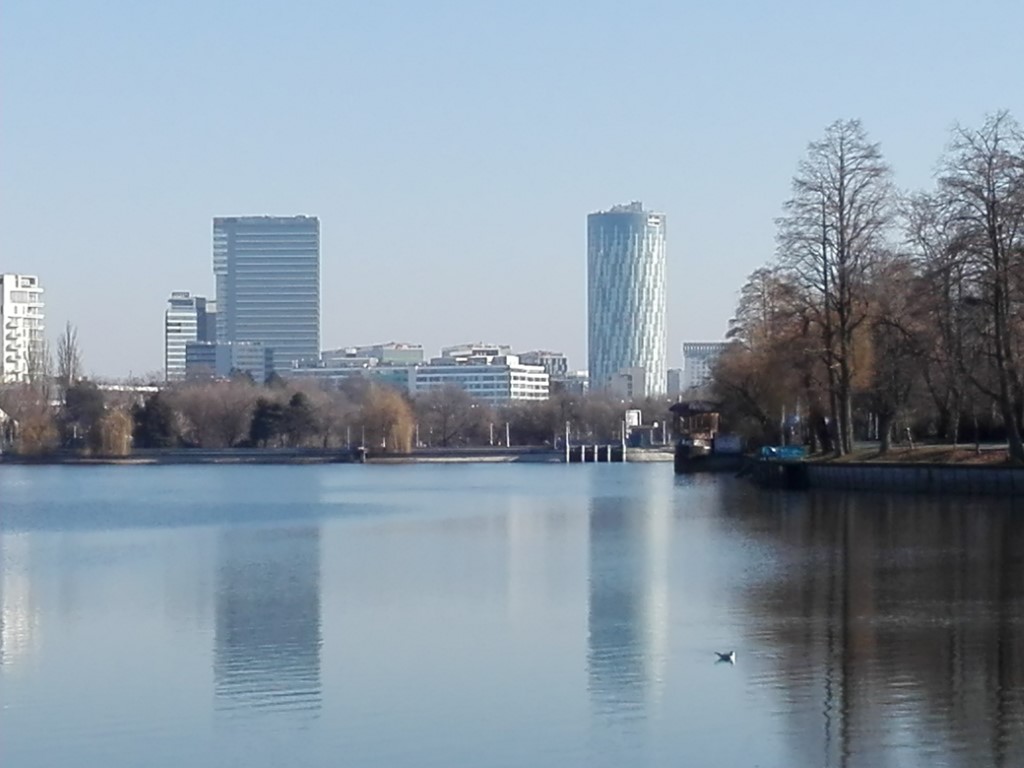

 In architecture, glass and steel are the essence of modernism. Today, when the number of city dwellers is increasing and the need for space is felt, glass and steel offer the possibility of high-rise buildings.
The shapes resulting from the combination of these two materials are impressive, glass and steel constructions existing all over the world.
The glass was born long before the steel. It is not known exactly when it first appeared, but there are many sources that indicate that the natural glass formed by the action of lightning on the sands has long been known to man.
When the glass was first obtained artificially, it is difficult to specify. There are certain sources that indicate the Egyptians of the time of the pharaohs as the first glass craftsmen. Other sources speak of the fact that the Phoenicians discovered the method of processing this material by blowing. Also, the Romanians are nominated as the first to use the glass to cover the windows.
In constructions, the glass has a long use, being used mainly for windows, because it allows the penetration of natural light inside and isolates the rooms from the outside environment.
Colorless windows that allow white light to cast shadows, or magnificent stained glass windows, which break down and filter the solar spectrum, allow artists (painters, architects, builders) to create fabulous spaces, whether it’s religious buildings, homes or institutions.
The world of skyscrapers
All over the world fabulous skyscrapers are built, which shine in the sun due to glass and which, because this material allows, often have gravity defying shapes. Also, many of the “smart buildings” projects, which are environmentally friendly, rely heavily on glass for lighting and insulation.

Bucharest was not bypassed by the new trend. Today, we are witnessing the permanent endeavor of the architects to integrate into the eclectic landscape of the capital of Romania modern structures, detached from the science fiction stories.
The building that dominates Bucharest by height is SkyTower, building located on Barbu Văcărescu Boulevard.
For a long time, the construction that was put into use in 2012, was the highest in Romania. With its 37 floors and 137 meters in height, the building dominates the city, offering a magnificent view over Bucharest.
Today, in Romania, there are taller buildings in Cluj Napoca and Timișoara.
This tower connects with the new “business center” from the beginning of the Pipera Road, built entirely of glass.
Glass office buildings were built, in particular, in the former industrial areas of the city, which have now become central areas due to the explosive development of recent years. But we find such buildings in the most surprising places in the city: on the road from Otopeni Airport, from the entrance to Bucharest or on the banks of the Dâmbovița river, in Grozavești, the neighborhood of student dormitories. Large companies have set up their offices in these areas to make it easier to recruit the workforce.
The construction of a building of this type lasts relatively little compared to a classical construction. And this is very important for the city: fewer and shorter construction sites, smaller quantities of conventional building materials, which means reducing the amount of waste, but also dust emissions, so reducing pollution. And the aesthetic effect is spectacular. The reflection of light and the mirror of the sky on the facades give the feeling of space.
The modern blends with the classic
The first glass building that Bucharest had was the Opera Center I, building near Eroilor metro station.
The boom in the office space market allowed, after 2000, an explosive development of buildings of this type. An example is Bucharest Business Park, near the House of Free Press. Other examples are Anchor Plaza, S Park, Petrom City etc.
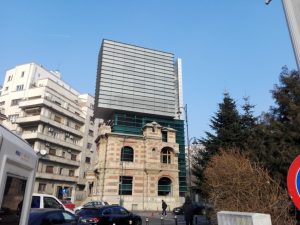
Not just new buildings include glass. There are also projects in which heritage buildings are currently restored with the help of glass. In this situation it is the headquarters of the Union of Architects in Bucharest, from the Revolution Square. Since the original construction burned during the events of 1989, the reconstruction was done taking into account the original elements.
And on this model, we can find other such buildings in Bucharest. For example, on Nicolae Filipescu Street or on Victory Avenue (Novotel Hotel).

Author: Ștefania Enache
Photo: Corina Gheorghe